































1. Record the original specification
Look for a part number, drawing or material code before relying on the used sample. A stretched, swollen or flattened ring may no longer represent the original size. Keep any packaging or maintenance record with the sample.
2. Measure ID and cross-section
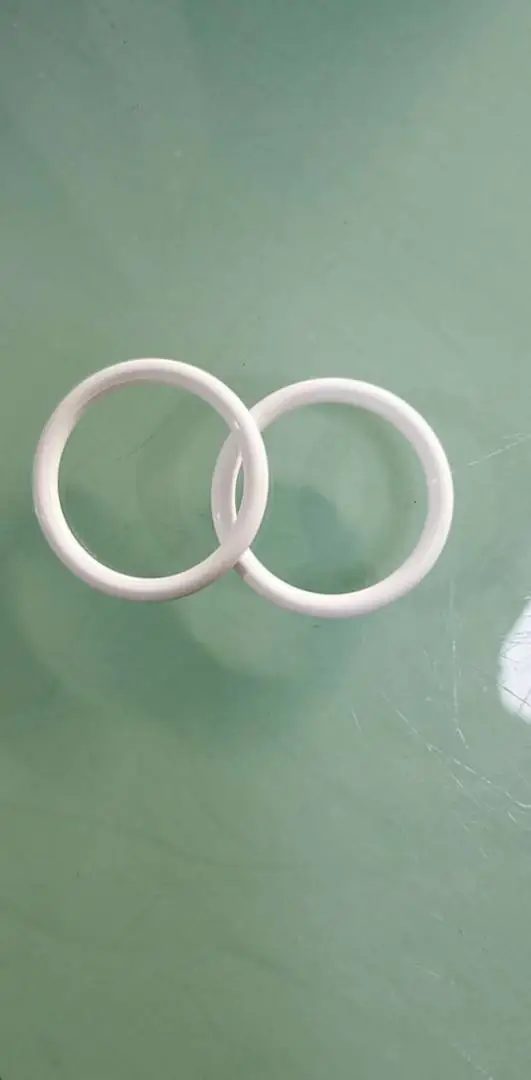
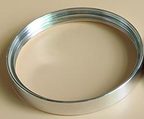
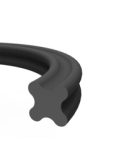
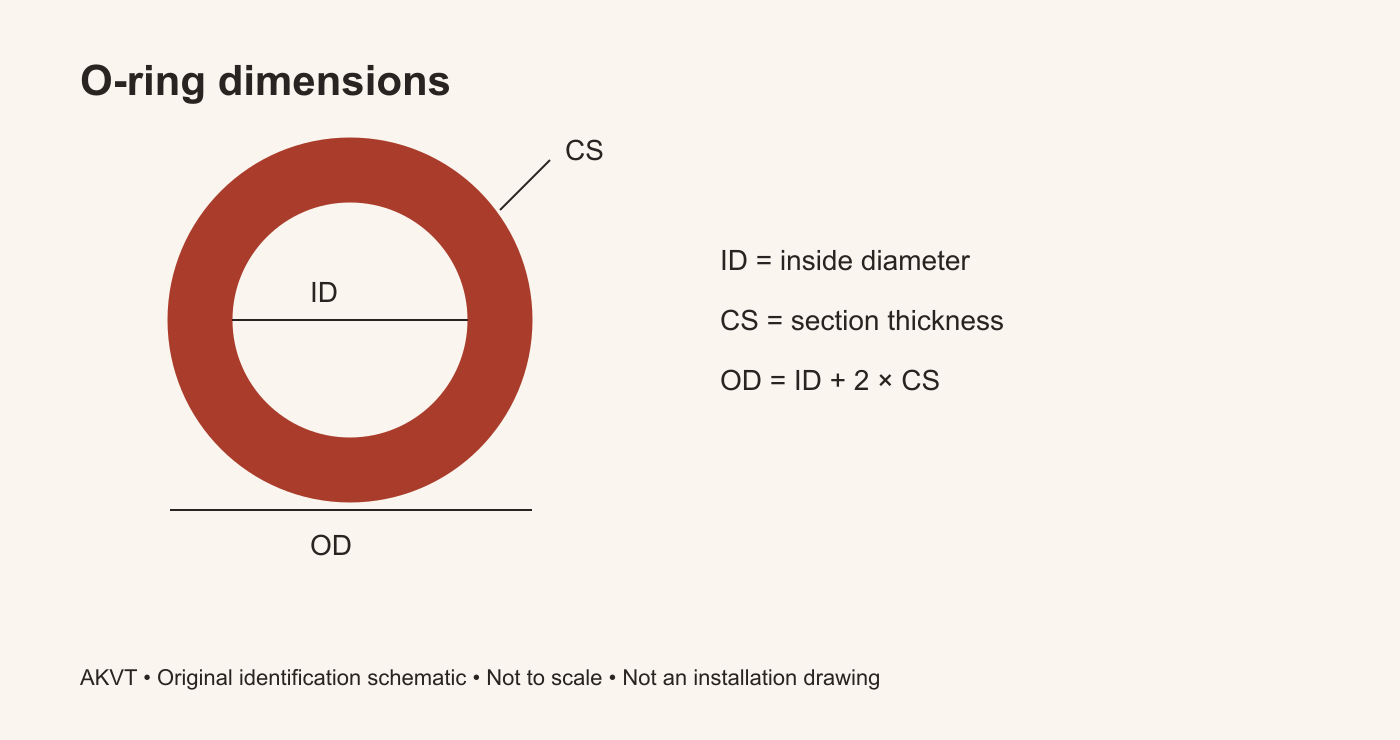
Place the relaxed ring on a flat surface. Measure the opening across its centre for inside diameter (ID), and the rubber section thickness for cross-section (CS). Avoid stretching or squeezing the sample with the measuring tool. Repeat measurements at several positions and report any distortion.
O-ring dimensions are commonly specified as ID × CS. Parker’s handbook provides dimensional tables and ordering examples using these two values. Parker O-Ring Handbook.
3. Check the outside diameter
For an ideal circular cross-section, OD = ID + 2 × CS. A 20 mm ID and 3 mm CS therefore gives 26 mm OD. This is a measurement example, not a recommended fit or a stocked AKVT size. The diagram identifies each dimension; it is not a manufacturing drawing.
4. Identify the material separately
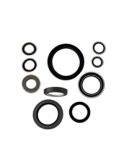
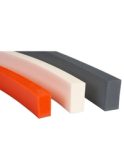
A matching size does not identify the compound. Include the original material code and hardness if known, along with the fluid, pressure, temperature and movement. Colour alone cannot establish an FKM grade or food-contact suitability. Review the white FKM O-ring page for compound-specific enquiry guidance.
5. Send an enquiry that can be reviewed
Include ID × CS and units; quantity; original designation; drawing or photographs; fluid and cleaning agents; continuous and peak temperature; pressure; static or moving service; delivery postcode and required date. Clearly label dimensions measured from a used sample.
Example: “20 mm ID × 3 mm CS measured from sample, 100 pieces; material unknown; pump cover application; drawing and fluid details supplied.” AKVT can then review what needs confirming before quotation.
Common questions
Can I round the measurements to the nearest millimetre?
Report the measured values and measurement uncertainty. Let the original specification or relevant dimensional standard establish the nominal size and tolerances.
Is a similar-looking ring enough?
No. Check the dimensions, compound and application requirements. Installation squeeze and stretch also depend on the equipment geometry. Parker O-Ring Handbook: design guidance.
Find a product or request help
Browse AKVT’s O-ring supplier catalogue and request a quotation with the details above.